Building a Custom Home on Smith Mountain Lake
There’s a reason people keep finding their way to Smith Mountain Lake. Over 500 miles of shoreline in the Blue Ridge foothills, deep water, mountain views, and a pace of life that’s hard to find anywhere else. We’ve been building custom homes here for over 35 years, and the lakefront projects are some of the work we enjoy most.
Building on the lake is different from building off of it. The lots are more interesting, the design possibilities are better, and the finished homes reward the extra thought that goes into them. Lakefront construction also involves details that don’t come up on other sites: shoreline regulations, building envelope decisions driven by weather off the water, and foundation work on sloped terrain. This page walks through what’s involved and how we approach it.
What Makes Lake Building Different
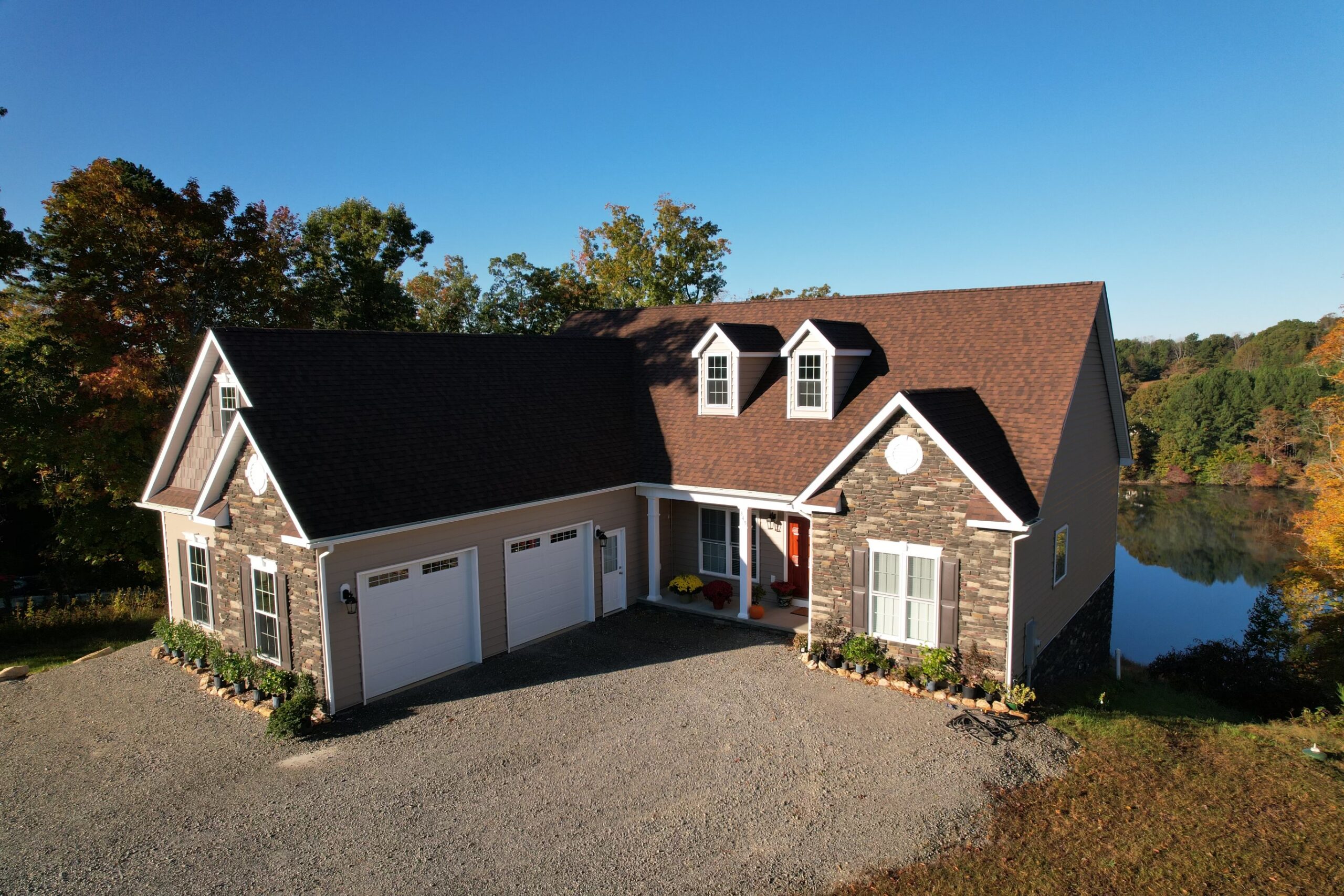
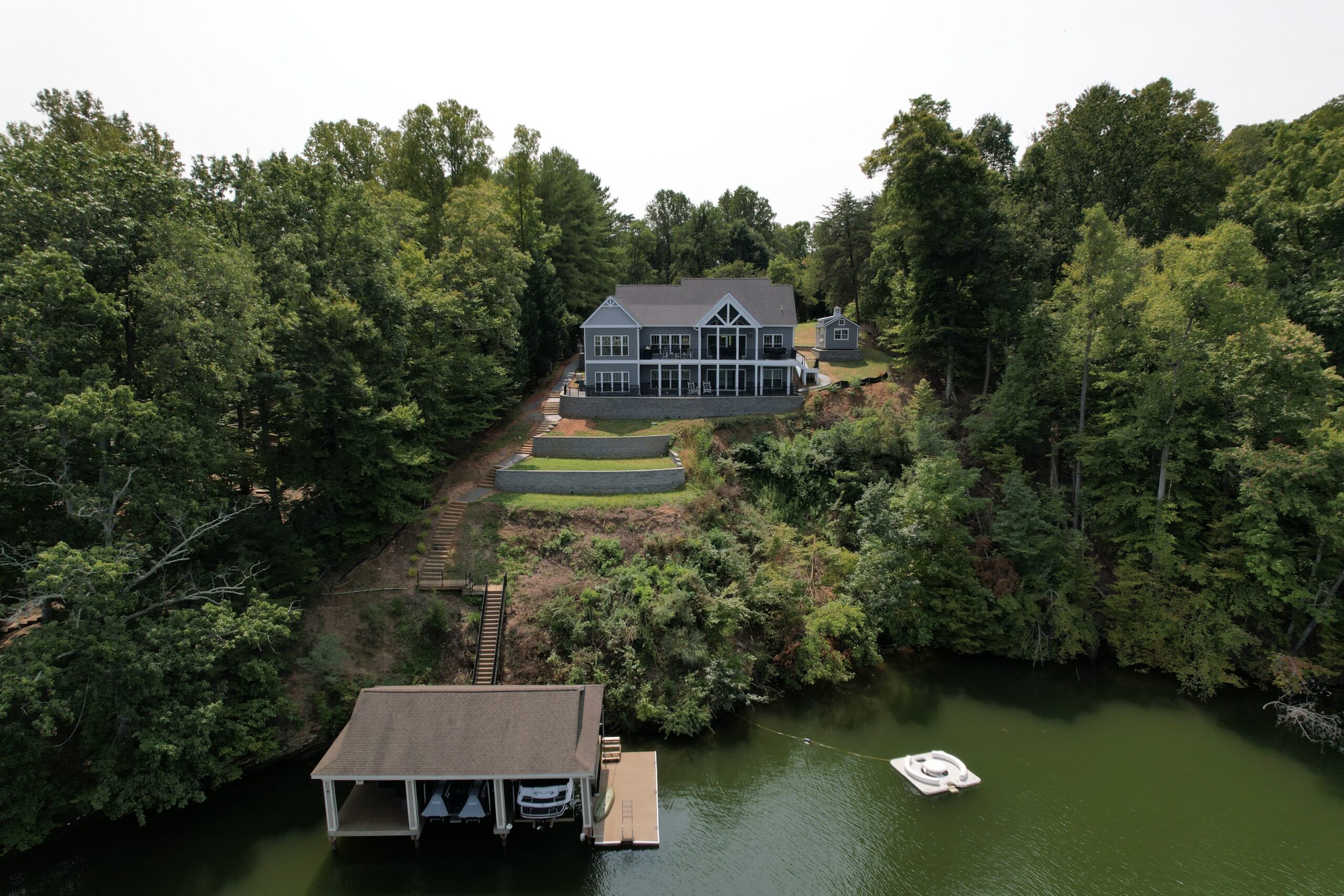
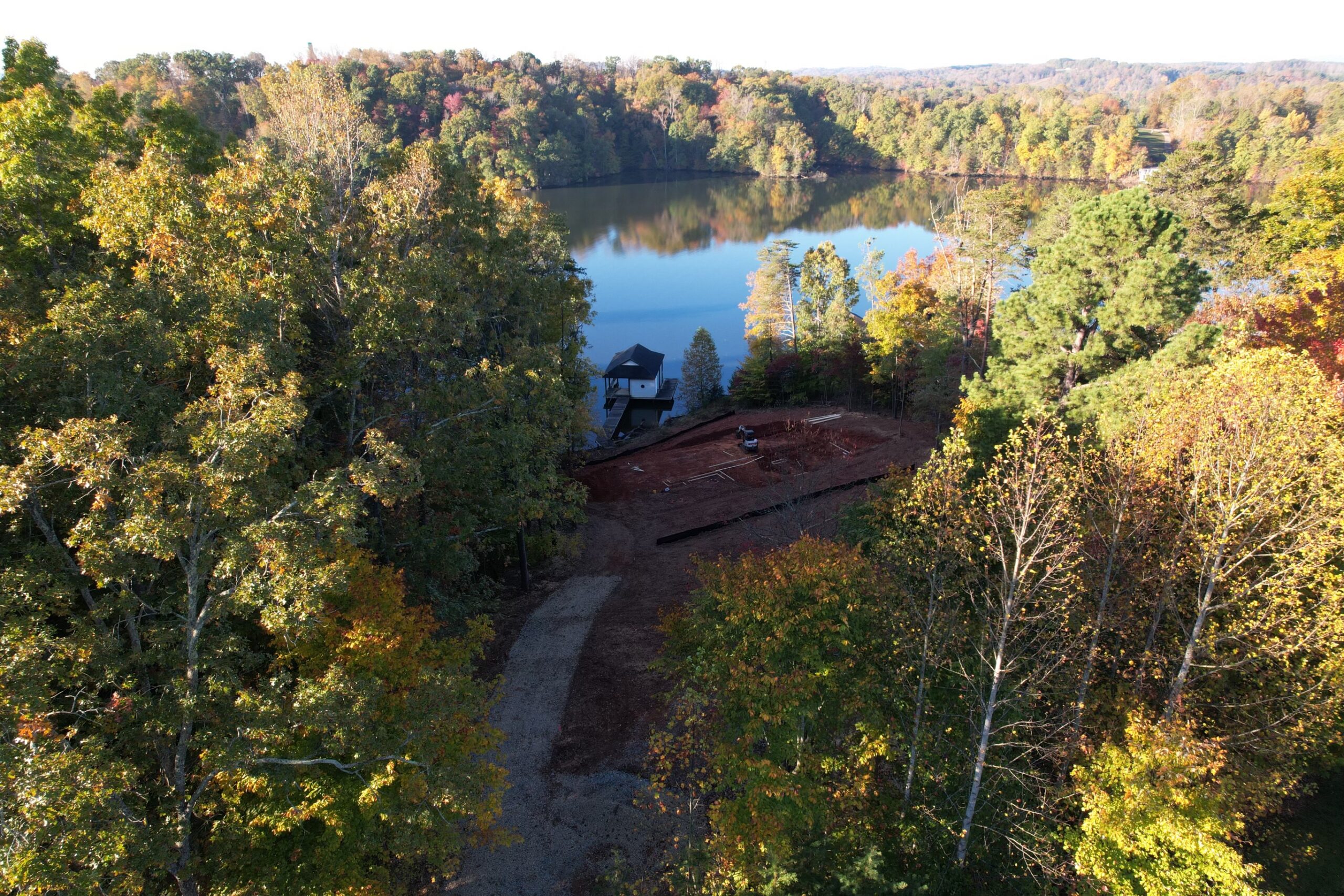
Lake lots have more character than flat sites. Most slope toward the water, which is what makes walkout lower levels possible, with living space opening directly to the lake. The grade, the soil, where the sun hits through the day, and how the lot frames the view all shape how the home should be designed and positioned. When those things are read correctly from the start, the result is a home that feels like it belongs on the site.
We walk every lot before design work begins. After 35 years of building around this lake, we’ve learned a lot about the terrain and the soil conditions in different areas. We can advise you on what a lot will likely require for foundation work, where the driveway makes the most sense, how the grade could affect drainage or access to the lake, and where positioning the home might offer the best of the view without creating problems downhill. That evaluation is part of our process.
Permits, Shoreline Rules, and What We Handle
Lakefront construction at Smith Mountain Lake involves a few more regulatory layers than building off the water. The main one is Appalachian Power’s Shoreline Management Plan, which governs what can be built or modified below the 800-foot contour around the lake. In practice, this affects dock construction, shoreline erosion control, and vegetation removal near the water. The permitting process is well established, and we work through it regularly.
County building permits, zoning requirements, and (in some developments) HOA architectural covenants also apply. Development covenants deserve particular attention at Smith Mountain Lake. Many lakefront communities have architectural control guidelines that regulate building materials, exterior colors, rooflines, minimum square footage, and even window and door placement. Some developments go further: covenants that give the developer final approval of all plans, meaning they can require changes to specifications, materials, or home placement that aren’t listed anywhere in the written rules. We’ve seen situations where buyers purchased lots without fully understanding these requirements, and the additional costs changed the scope of what they could build. After 35 years in communities around this lake, we can help you understand which developments have straightforward guidelines and which ones may require more careful planning. We cover this in more detail in our article on building within HOA guidelines.
If the lot is not on public sewer, an approved perk test determines what type of septic system is required, which can also affect where the home sits on the property. These are the kinds of things we help identify early so they don’t become surprises later.
If you’re coming from out of state, this regulatory landscape might feel unfamiliar. It’s manageable. We build on lake lots regularly and know how to navigate the process efficiently.
How We Build for Lakefront Conditions
Homes on the water take more weather than homes set back from it. UV exposure, humidity, temperature swings, and wind off the lake are constant. The materials and systems we include as standard reflect that.
Our exterior starts with .044 Mastic CarvedWood vinyl siding, which is thicker than what many builders specify. Thickness matters on lakefront homes because thinner siding is more prone to warping and fading under sustained UV and wind exposure. Behind the siding, ZIP System sheathing provides a structural layer with an integrated water-resistive barrier that seals at the seams. For developments that require alternatives to vinyl, LP SmartSide engineered wood is an upgrade we install frequently. More on exterior siding options.
Windows on a lake home do more than let in light. They frame the view, and on lake-facing walls they’re often larger and more exposed to direct sun. Our standard double-hung Low-E tilt vinyl windows reduce heat gain and UV transmission without darkening the view. During design, we work through window placement and patio door configurations to balance the panoramic feel with energy performance. More on window performance.
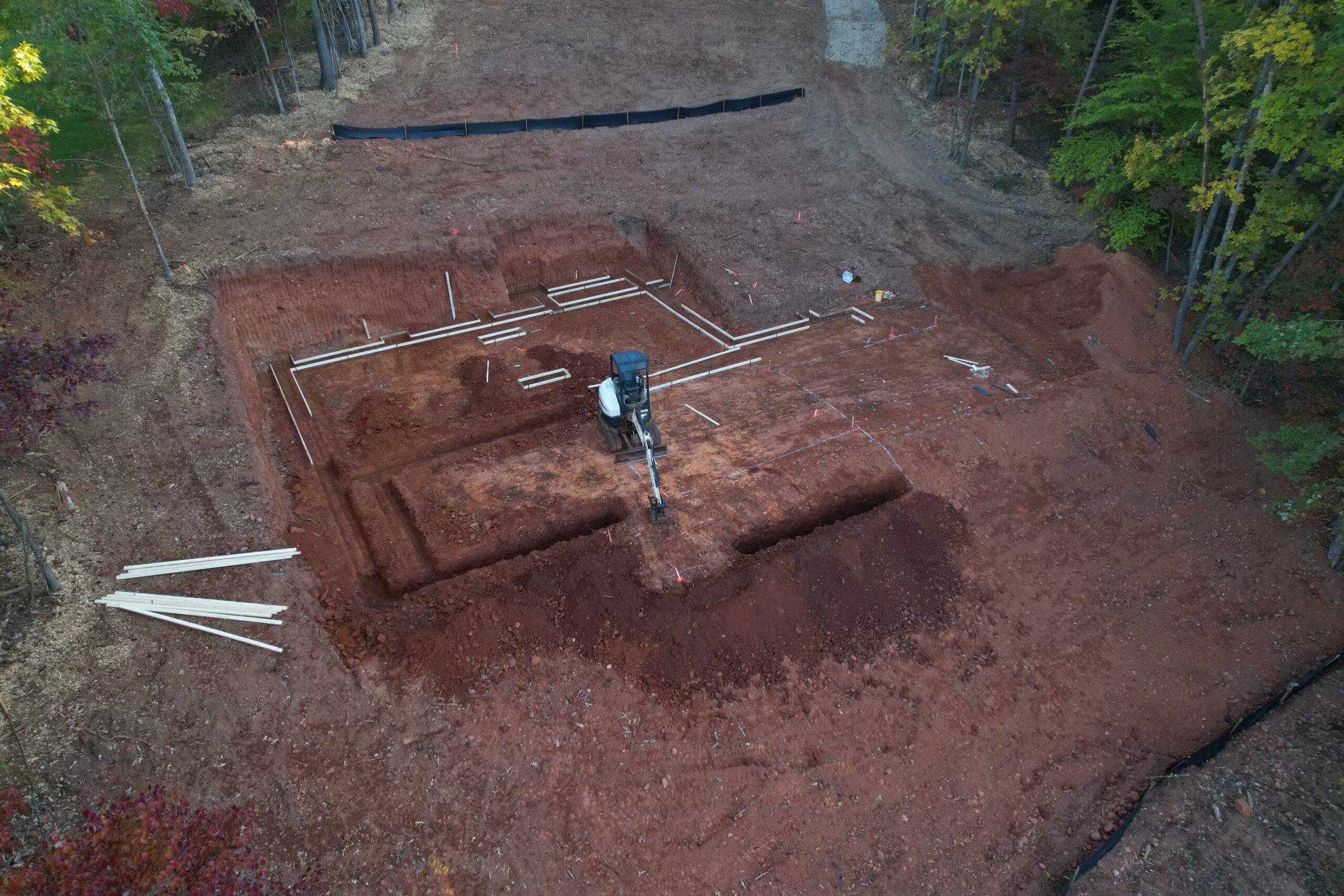
Foundations on sloped lake lots deal with grade changes, water table proximity, and drainage patterns that direct water toward the home from the uphill side. We pour 9-foot concrete basement walls on every home, with Tuff-n-Dri waterproofing, Warm-n-Dri insulation board, and Drain Star drainage. The system comes with a 30-year manufacturer warranty. On lake lots, grading and drainage deserve particular attention because the conditions tend to be less forgiving. More on foundations.
Every Ellis home includes a 15 SEER heat pump paired with a variable-speed air handler. The variable-speed component is what sets it apart: instead of cycling on and off, the system adjusts output to match what the home actually needs at any given time. In a lake home with large windows and open floor plans, heating and cooling loads shift throughout the day, and a system that modulates continuously delivers more consistent comfort and lower operating costs. More on heat pump performance.
Designing Around the View
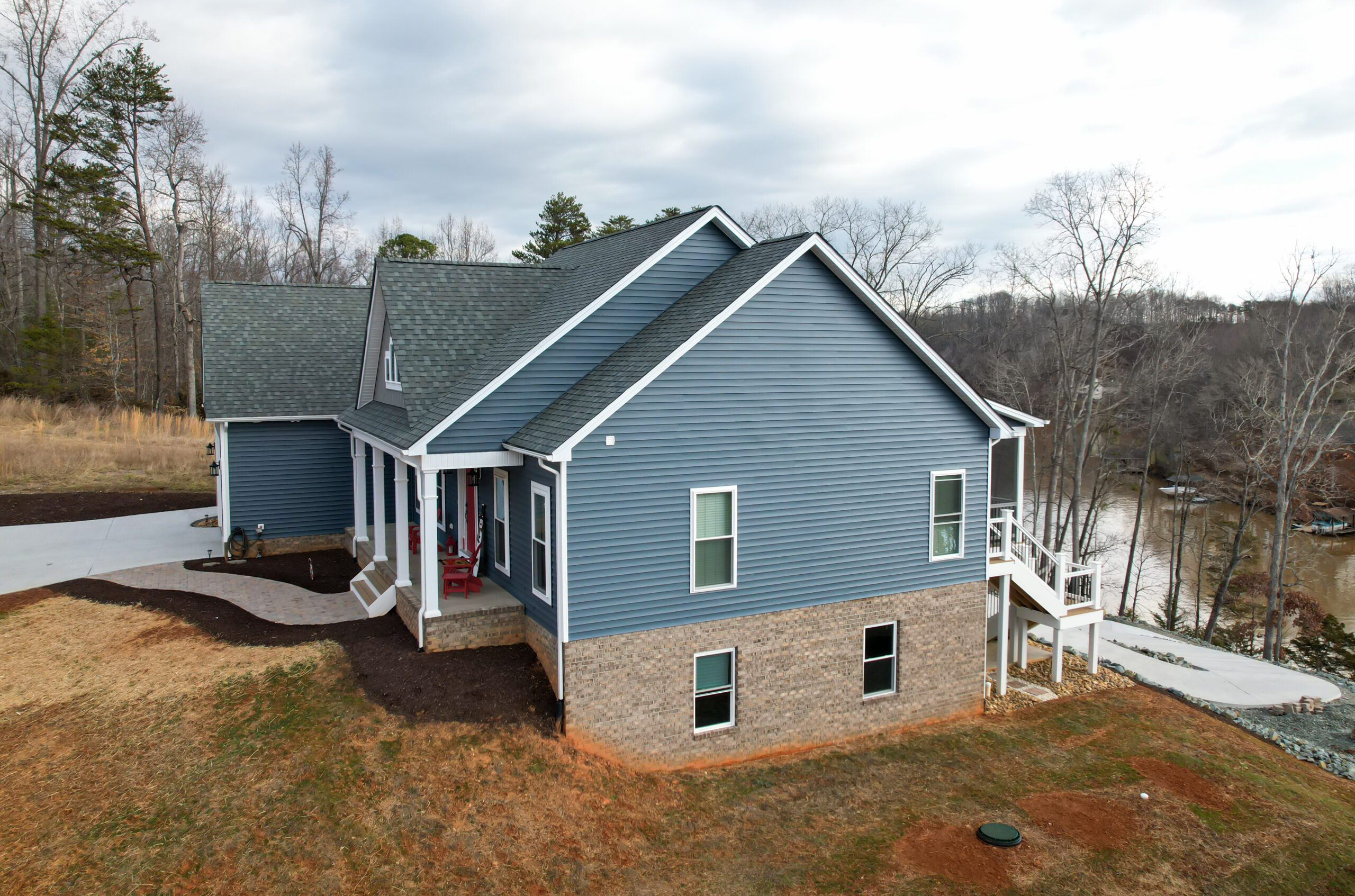
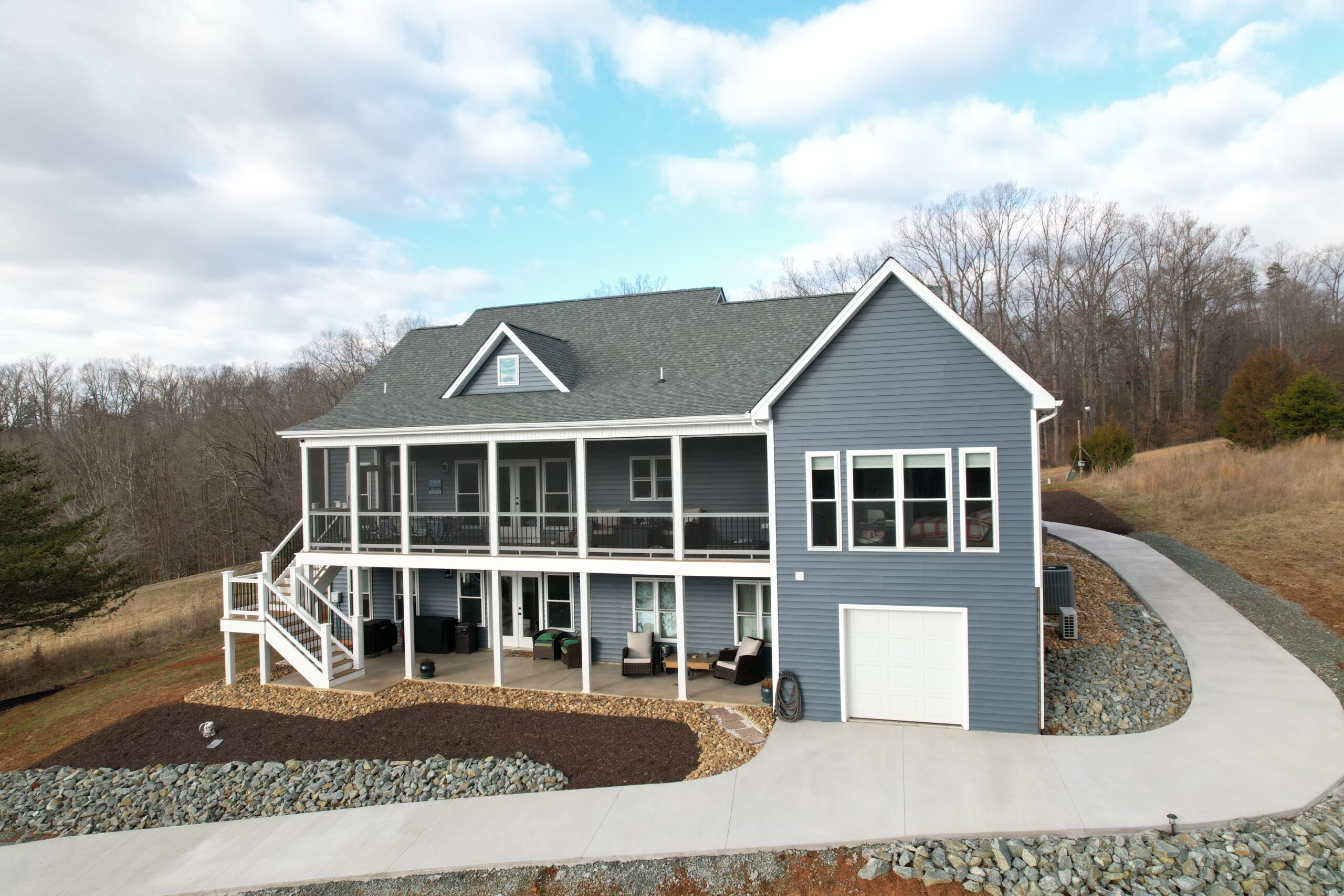
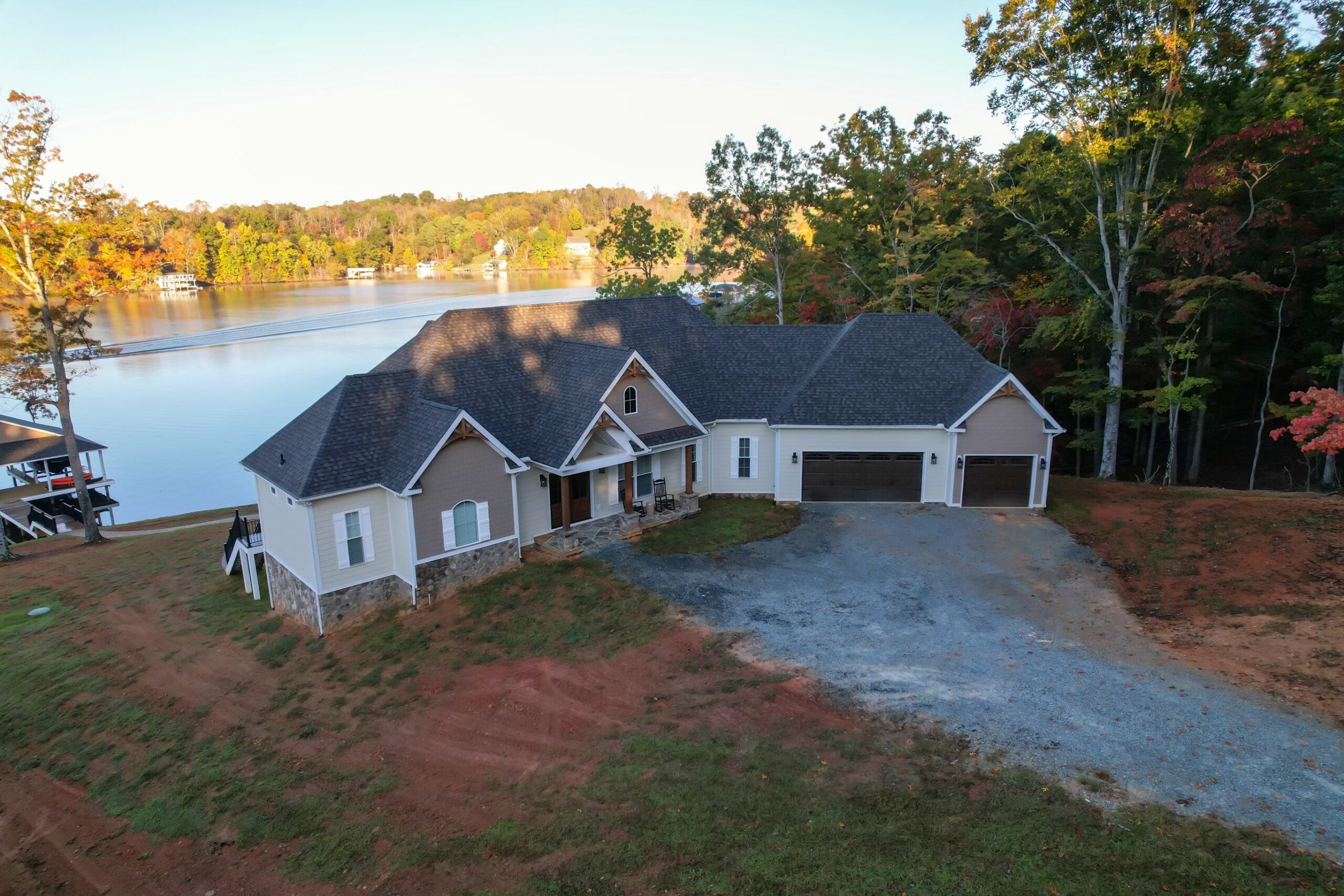
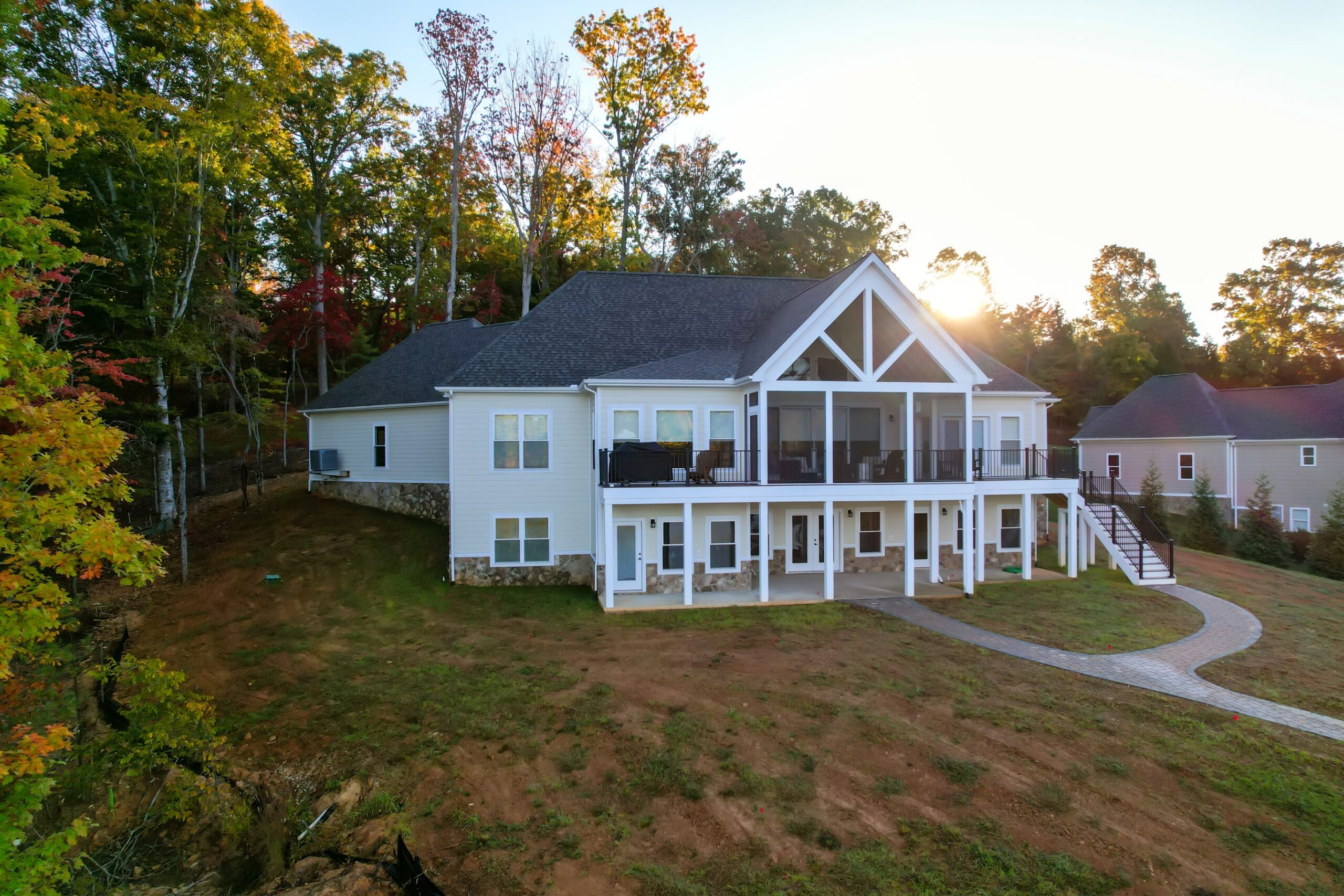
The best lake homes are planned around the lot and the water, not adapted from a plan that was drawn for a flat site. Many of our lakefront customers want the primary living spaces facing the lake: kitchen, great room, primary bedroom. On a sloped lot, that often means a walkout lower level opening to the lake side, with the entry and garage on the uphill side.
The 9-foot basement walls and floor trusses we use as standard are what make that lower level work as real living space. Full ceiling height, with plumbing and HVAC running through the trusses rather than hanging below the framing. For homeowners who want the lower level to feel like the main floor rather than a basement, this approach makes that possible, but it needs to be planned from the start.
Outdoor living is a bigger part of the design on the lake than anywhere else. Covered porches, screened areas, and decking that flows from interior spaces to the view are common features. We pour footers under all porches, stoops, and patios and can tie optional patios into the foundation, so outdoor living spaces are structurally permanent.
Whether you bring your own plan, work from one of ours, or start from a blank page, the design process accounts for the specific conditions of your lot. That’s where the lakefront experience shows up most clearly.
For Buyers Coming From Out of State
A lot of our lakefront customers are planning from a distance, whether it’s a primary residence, a retirement home, or a place they’ll use on weekends until they’re ready to move full time. We build for out-of-state customers regularly and the process works well.
The specifications and construction standards are the same regardless of where you live. What tends to adjust is communication. Customers who can’t visit the site weekly naturally want more detail about what’s happening at each stage, and we’re happy to provide that. Selections (finishes, fixtures, countertop colors, flooring) can be handled through our selection center or coordinated in advance. Most customers find that one or two visits during the selection phase is enough to make confident choices.
If You’re Still Looking for a Lot
If you haven’t purchased your lot yet, we can help you evaluate it before you commit. The things that matter most on a lake lot aren’t always visible from a showing: perk test status, septic system implications, slope and soil conditions, utility access, driveway grade, AEP shoreline classification, and whether the lot can comfortably support the home you have in mind. We offer lot evaluations as a standard part of our process because the lot and the home are inseparable decisions, and it helps to have a builder’s perspective early.
Your real estate agent is an important partner in this, especially one who knows the Smith Mountain Lake market well. Between a knowledgeable agent and a builder who’s built throughout the area, you’ll have the information you need to buy with confidence.
A Smarter Starting Point
Every Ellis home is built with materials and systems that most builders price as upgrades. That means your project starts from a higher baseline before any custom selections are made. A few that are particularly relevant to lakefront construction:
Our lakefront projects are typically large, custom homes, and most go well beyond these specifications. Higher-end finishes, upgraded cabinetry, expanded outdoor living spaces, specialty lighting, and custom architectural details are common. The point is that with Ellis, upgrades build on top of a base that’s already ahead of the norm. You’re not paying extra to reach a quality threshold; you’re starting there.
Our full specifications page details everything included in the base price.
Let’s Talk About Your Project
Whether you’re early in the process or ready to build, we’re glad to talk through what you’re considering. We’ve been building on Smith Mountain Lake for over 35 years, and we enjoy helping customers think through the decisions that come with lakefront construction.
View our detailed specifications or get in touch to discuss your lakefront project.